
New Public Rescue Equipment Installed Across Southern Tasmania to Help Bystanders Save Lives
Tuesday 20 October 2026
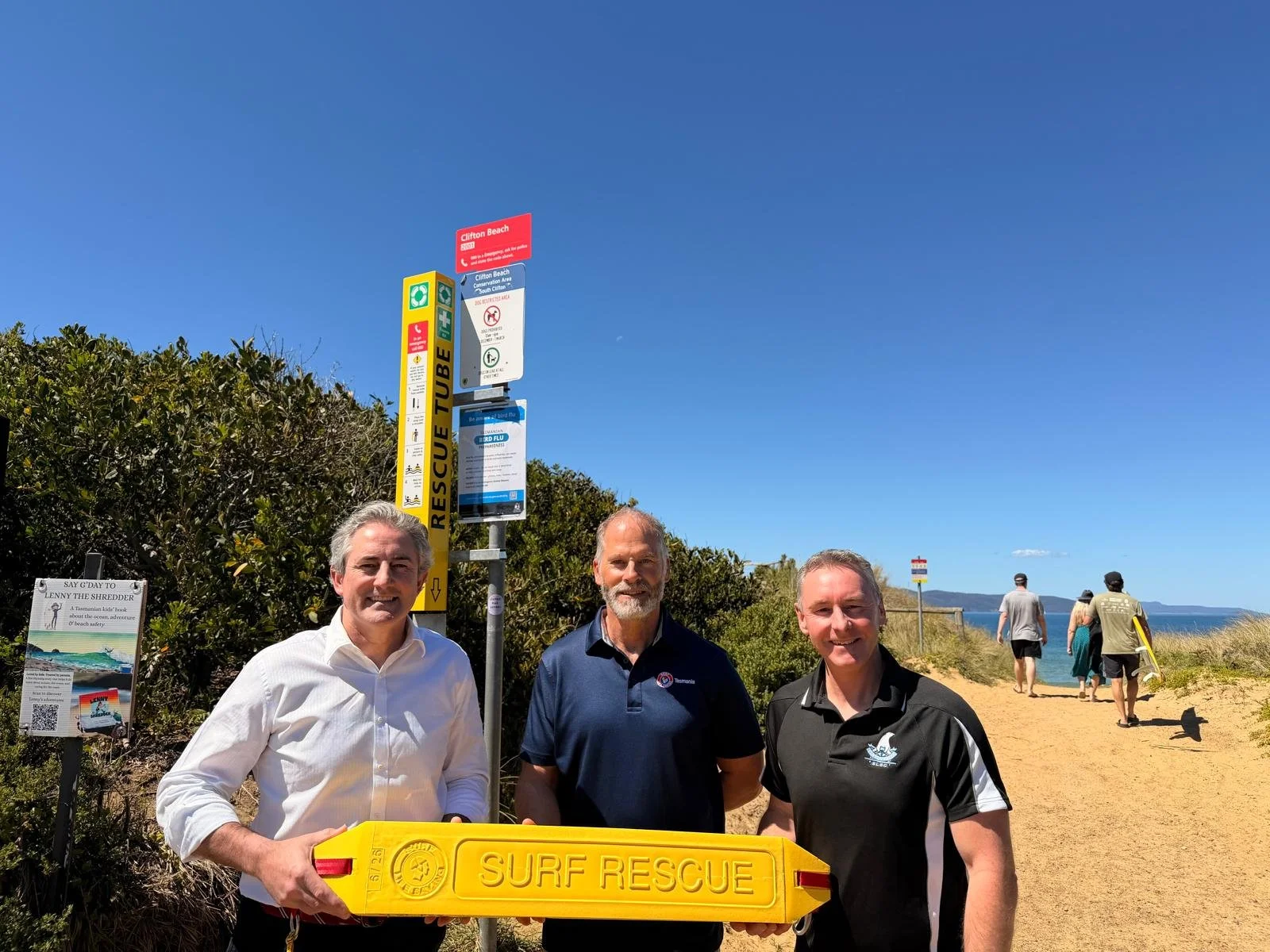
Beachgoers at Clifton Beach, Bellerive Beach, Carlton Beach and Park Beach now have access to lifesaving rescue equipment in an emergency, following the installation of new Public Rescue Equipment (PRE) stations across the Clarence and Sorell municipalities last week.
The installations mark an exciting milestone for Surf Life Saving Tasmania (SLST), with the project funded by the Australian Government through the national Beach Drowning Blackspot Reduction Program.
Building on successful public rescue equipment initiatives across Australia and internationally, SLST is rolling out PRE stations at coastal locations where lifesaving patrols are not always available, providing communities with access to rescue equipment in an emergency.
Delivered in partnership with the City of Clarence and Sorell Council, the first stage of the rollout includes stations at Clifton Beach and Bellerive Beach in Clarence, and Carlton Beach and Park Beach in Sorell.
The milestone was marked at Park Beach on Saturday by Sorell Mayor Janet Gatehouse, SLST Manager Lifesaving Services Ned Reardon and Carlton Park SLSC Lifesaving Manager Alison McIntyre. A separate visit to Clifton Beach on Sunday brought together City of Clarence Mayor Brendan Blomeley, Surf Life Saving Tasmania CEO Tony van den Enden and Clifton Beach SLSC President Matthew Clingeleffer.
Each station contains a rescue tube, clear instructions and a unique location identification code to help emergency services pinpoint the location of an incident. The equipment is designed to support safer bystander responses while emergency services are contacted and on their way, particularly outside patrol hours.
SLST CEO Tony van den Enden said the installations were an important step towards improving coastal safety and empowering communities to respond in an emergency.
"Many drownings happen at beaches or times when lifesavers aren't on patrol. These game-changing stations mean that if someone gets into trouble, a bystander has a rescue tube and clear instructions right there, while help is on the way," Mr van den Enden said.
"This first stage has been made possible through funding from the Australian Government and the support of the City of Clarence, Sorell Council and our local surf lifesaving clubs. It's a great example of how we can work together to make our coastline safer for everyone."
"But the most important thing anyone can do in an emergency is call Triple Zero (000) first, and never put themselves at risk."
Clarence City Council Mayor Brendan Blomeley said City of Clarence was pleased to work closely with Surf Life Saving Tasmania to help make Clifton and Bellerive beaches safer for everyone who visits.
"We are incredibly fortunate here in Clarence to have some of Tasmania’s most beautiful beaches right on our doorstep," Mayor Blomeley said.
"Bellerive Beach and Clifton Beach are popular and well-loved destinations for our community and visitors to the area.
"These beaches are much more than scenic destinations. They are places where members of our community can gather, stay active and enjoy time with family and friends.
"Surf Life Saving Tasmania's new Public Rescue Equipment stations at Bellerive Beach and Clifton Beach are important safety resources and will be of great benefit to the community."
Sorell Mayor Janet Gatehouse also welcomed the rollout of equipment at Park Beach and Carlton Beach.
Sorell Mayor Janet Gatehouse also welcomed the installation of the new equipment at Park Beach and Carlton Beach, acknowledging the beautiful beaches enjoyed by locals and visitors across the municipality.
Mayor Gatehouse recognised the importance of initiatives like this in improving community safety, with the new equipment a welcome addition to the local coastline and a valuable resource that could help save lives in an emergency
SLST acknowledges the funding support of the Australian Government, together with the City of Clarence, Sorell Council and local surf lifesaving clubs in helping deliver the first installations.
The organisation is continuing to work with Kingborough Council and other land managers to expand the program to additional coastal locations across Tasmania.
Public education resources are also being developed to help beachgoers understand how to use the equipment safely and report damaged or missing equipment.
To learn more about Public Rescue Equipment and how it works, visit www.slst.asn.au/pre.